Lingerie Factory Audit: 20 Questions to Ask Before You Wire a Deposit
- Share
- Issue Time
- Nov 3,2026
Summary
Twenty questions in five groups, each with the answer a real factory gives and the answer an intermediary gives. Includes the documents to request and the red flags that appear in the first reply.
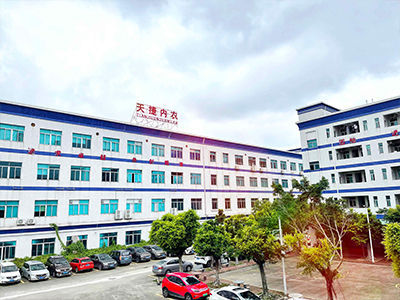
Twenty questions, asked in one email, will tell you more about a lingerie supplier than an hour of video call. Not because the answers are hard, but because a factory answers them with specifics and an intermediary answers them with adjectives.
The questions below are grouped into five blocks: who they actually are, what equipment they run, how they control quality, what compliance they hold, and what the commercial terms really say. Ask all twenty at once. The speed and the shape of the reply is itself the first data point.
Block 1 — Identity and capacity
- What is your business licence number, and does the registered scope include garment manufacturing? A trading company licence will say trading. The scope is public record and takes one minute to check.
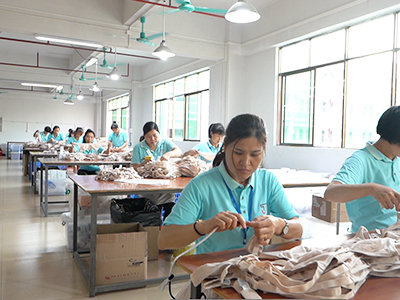
- How many people work in production, and how many of them are on the sewing floor? Total headcount includes sales, QC and warehouse. The sewing floor number is the one that determines capacity.
- How many lines do you run, and what is the current loading? A factory that says "we can start next week" without checking a schedule is either empty or not producing.
- Which processes are in-house and which are subcontracted? Cutting, sewing, cup moulding, bonding, printing and embroidery. Lingerie is decided at cutting and cup assembly — if those two are outsourced, you are buying from a coordinator.
Block 2 — Equipment and construction
- How many cup moulding machines do you have, and which cup sizes can you mould? This single answer establishes whether the factory can produce A to K cups or only a narrow fashion range.
- Do you have bonding machines for seamless construction, or do you only sew? Bonded and sewn are different equipment and different skills. A factory that does both can advise honestly on which is right for a design.
- What stitch types do you use on elastic and on cup seams? Zigzag, overlock, flatlock and coverstitch each behave differently on stretch lace. The answer should name them.
- How do you handle grading beyond DD? Grade rules above DD are not a linear extrapolation. If the answer is "same as the small sizes", the large-size range will not fit.
Block 3 — Quality control
- What is your AQL, and at which stages do you inspect? AQL 2.5 at final inspection is standard for lingerie. Inline inspection is what actually reduces defects; final-only inspection finds them after the cost is already spent.
- Who does the inspection, and do they report to production or to management? QC that reports to the production manager is a formality. Structure decides whether a defect gets written down.
- What do you do with a rejected lot? Rework, sort, or ship with a credit. The answer reveals whether rejects have a cost inside the factory.
- Can we book a third-party inspection before shipment, and who pays? A factory that resists this is telling you something. Our position is that the buyer is welcome to book one at any point after the goods are packed.
Block 4 — Compliance and testing
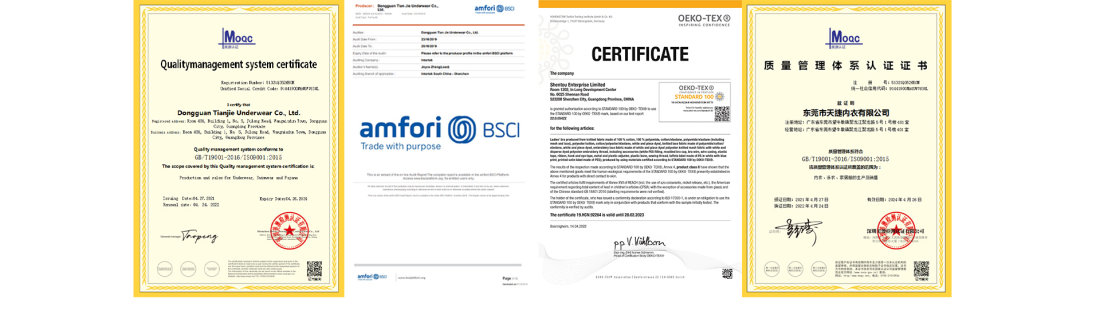
- Which certifications do you hold, with numbers and expiry dates? ISO 9001, ISO 14001, ISO 45001, OEKO-TEX Standard 100, GRS, BSCI. Verify each number with the issuing body; every one of them has a public lookup.
- Is your OEKO-TEX certificate on the fabric or on the finished garment? These are different certificates with different scope, and retail buyers increasingly ask for the garment level.
- Can you supply recycled or organic fibre with a transaction certificate? GRS claims need a TC per shipment, not just a logo on the website.
- Which tests do you run routinely, and which are sent out? Colourfastness, shrinkage, pilling, dimensional stability and fibre composition. Knowing what is routine tells you what will cost extra.
Block 5 — Commercial terms
- What is the sample lead time and the bulk lead time, separately? Development sample and salesman sample are two different waits. Ours are 7 days and 2 to 3 weeks; bulk is 60 to 90 days after approval and deposit.
- What is the payment structure, and what does the deposit cover? Standard is a deposit with the balance against the bill of lading. If the deposit is asked for before any specification is signed, slow down.
- What is the minimum per style per colour, and what happens below it? Ours is 1,000 to 3,000 pieces depending on fabric and construction. A supplier who quotes a minimum and then accepts a tenth of it is buying the order and will recover the cost elsewhere.
- Who owns the pattern and the tech pack we paid to develop? Get this in writing. Patterns developed at the buyer expense should not appear on another customer invoice.
| Question | Strong answer | Warning sign |
|---|---|---|
| Licence scope | Manufacturing in the registered scope | "We are a trading company but we have our own factory" |
| Sewing headcount | A specific number, with the split | Only a total headcount |
| Cup moulding | Machine count and size range | "All sizes available" without a range |
| Cutting and cups | In-house, named processes | Neither mentioned |
| AQL | AQL 2.5, inline plus final | "100 percent inspection" with no standard |
| Certificates | Numbers and expiry dates | Photos of frames |
| Lead times | Sample and bulk stated separately | One number for everything |
| Pattern ownership | Written confirmation | Silence |
Four replies that should stop the process
No business licence number. No sewing floor headcount. No machine list. No named certification numbers. Each of these takes a real factory two minutes to answer, and each of them takes an intermediary a day of inventing.
For reference, here is how we answer our own list: lingerie production, bra manufacturing, plus size and full-bust and seamless bonded. Each page states capacity, equipment, minimums and lead times.
Audit us with the same twenty questions
Send the list and we will answer every line in writing, with certificate numbers and machine counts.